
Generator Maintenance Schedule and Checklist for Standby Generator Fleets
A standby diesel generator needs a weekly inspection, a monthly test run of at least 30 minutes under load, a full service every 12 months or 250 run hours (whichever comes first), and an annual load bank test if monthly runs stay below 30% of rated load. NFPA 110 sets these minimums for emergency systems; the manufacturer's manual sets exact intervals.
In this article
- What does a standby generator maintenance schedule include?
- Weekly generator inspection checklist
- Monthly generator test: how long and at what load?
- Annual generator service checklist
- When is a load bank test required?
- Multi-year maintenance tasks
- How to run a maintenance schedule across a generator fleet
- Frequently asked questions
- Sources
A standby generator spends almost its whole life switched off, and that is exactly what makes it fragile. Batteries discharge, fuel ages, seals dry out and small faults stay hidden until the day the grid fails. A maintenance schedule exists to find those faults on a quiet Tuesday instead of during an outage.
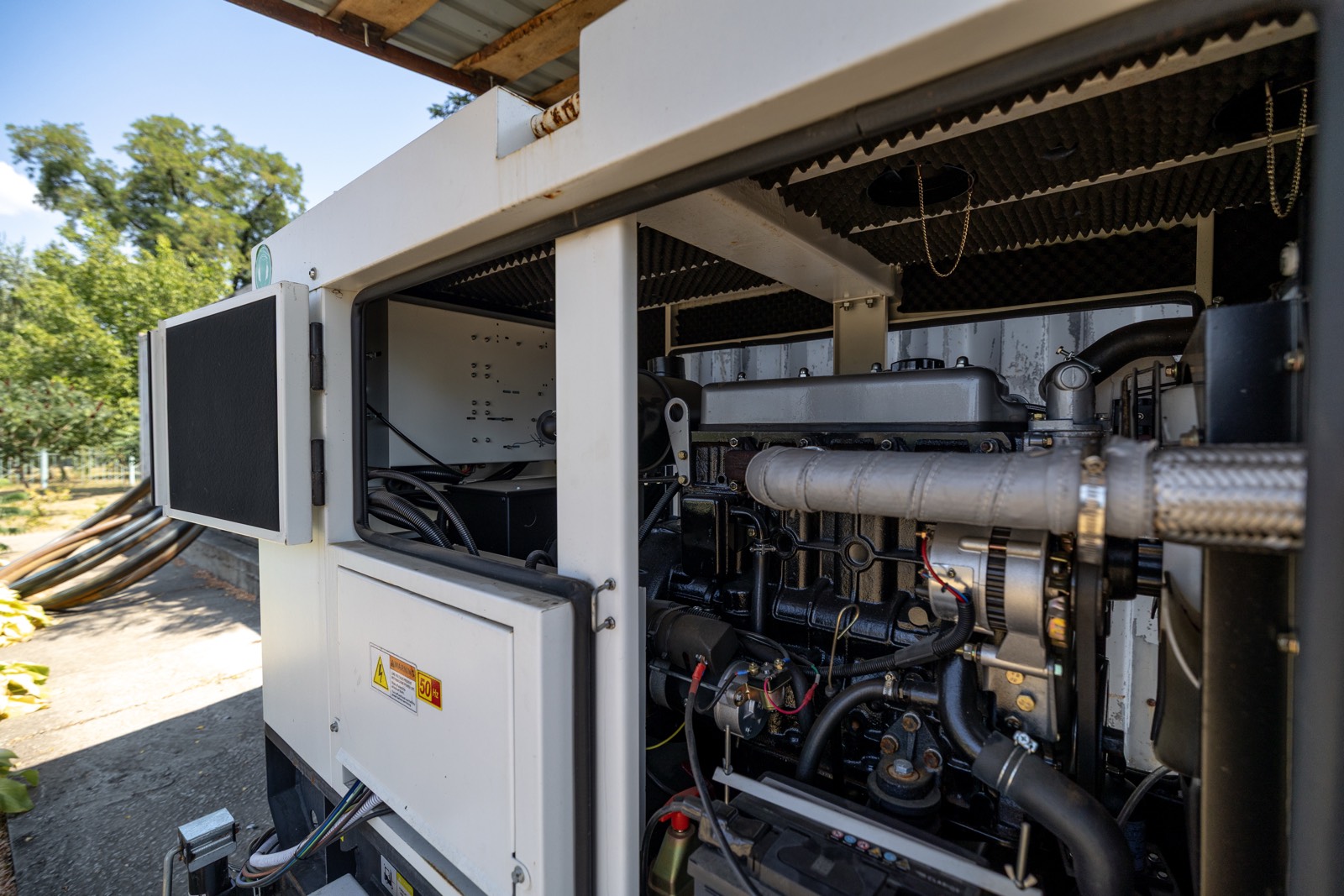
This guide gives a practical schedule for standby diesel generators used in data centers, telecom sites, hospitals, retail chains and industrial facilities. It combines the minimum requirements of NFPA 110 (the US standard for emergency and standby power systems) with common manufacturer intervals and what works when you run dozens or hundreds of sites.
What does a standby generator maintenance schedule include?
A complete schedule has five layers, each catching a different kind of failure:
| Interval | What it catches | Typical tasks |
|---|---|---|
| Weekly | Obvious faults and wrong settings | Visual inspection, leaks, fluid levels, battery charger, control switch in AUTO |
| Monthly | Problems that only show under load | 30 minute test run under load, transfer switch operation, battery test |
| Annual or 250 run hours | Wear and ageing | Oil and filters, coolant and fuel analysis, safety shutdown checks |
| Annual (if lightly loaded) | Carbon build-up from low load | Load bank test at 50% and 75% of rated kW |
| Every 2 to 5 years | Components with a fixed life | Batteries, coolant, hoses, belts, extended duration test |
The exact intervals for each unit always come from the manufacturer's manual. Treat the tables below as the minimum structure and adjust them to the engine model, the site conditions and local regulations.
Weekly generator inspection checklist
NFPA 110 requires emergency power systems to be inspected weekly. A weekly visit does not need tools, only attention:
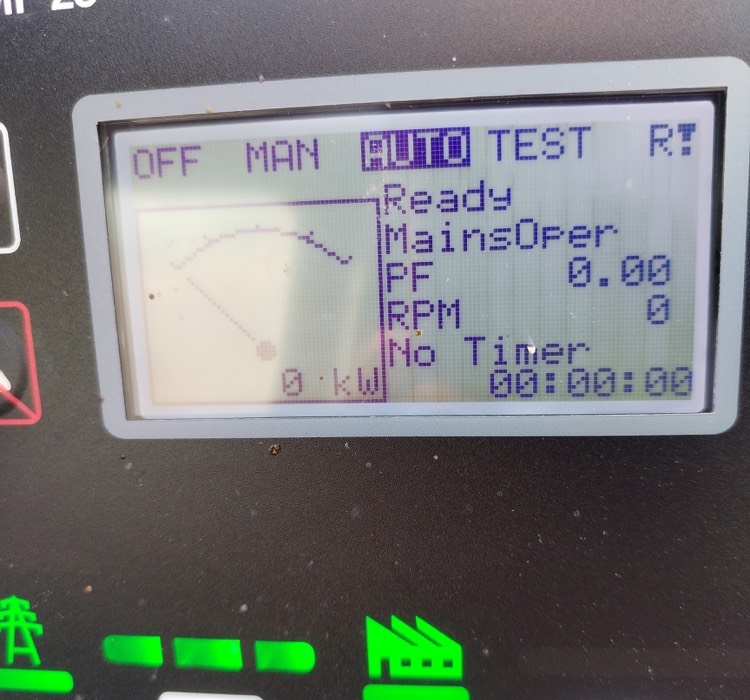
- Control switch in AUTO. A generator left in OFF or MANUAL after a test will not start when the grid fails.
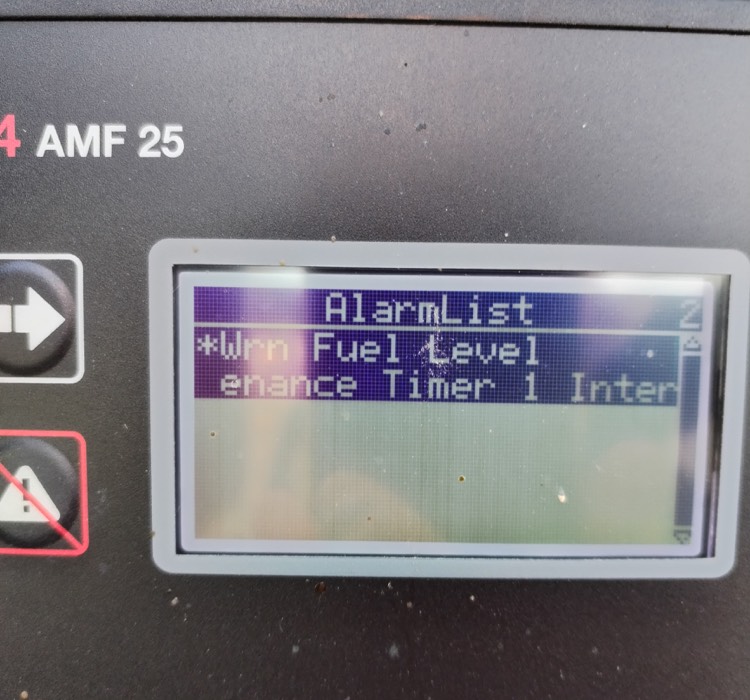
- No active or recent alarms on the controller. Check the event log, not only the screen.
- Battery charger on and in float, with no charger fault. Note the battery voltage.
- Fuel level above the minimum your site requires for the rated runtime.
- Coolant level in the expansion tank and block heater working (the engine block should be warm).
- Oil level on the dipstick, between the marks.
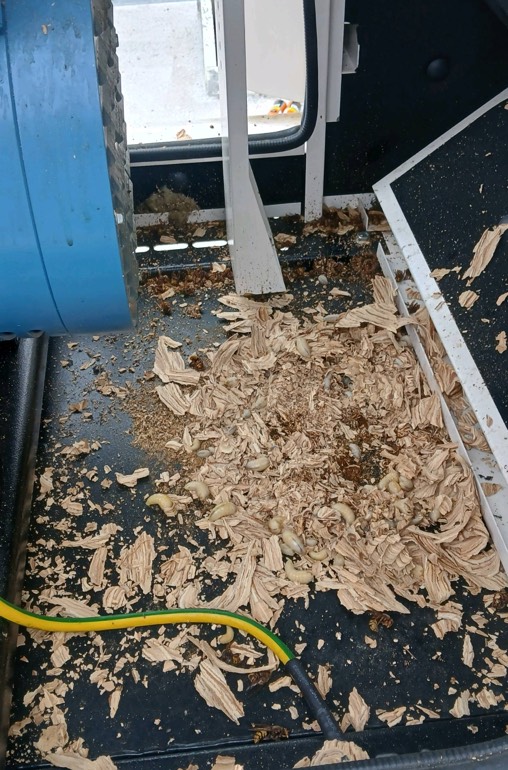
- No leaks of oil, fuel or coolant under the unit and around hoses and fittings.
- Air inlets and exhaust free of debris, nests, snow or stored material.
- Enclosure and fuel tank area clean, dry and secure.
Monthly generator test: how long and at what load?
The monthly test is the most important routine in the schedule, because many faults only appear when the engine is running and carrying load.
Under NFPA 110, generators in Level 1 and Level 2 service must be exercised at least monthly for a minimum of 30 minutes, either at no less than 30% of the nameplate kW rating or at a load that keeps the exhaust temperature at the minimum recommended by the manufacturer.
A good monthly test includes:
- Starting through the transfer switch, so the whole chain is tested: grid loss signal, start, transfer, run, retransfer and cool down.
- Running at least 30 minutes under real building load where possible.
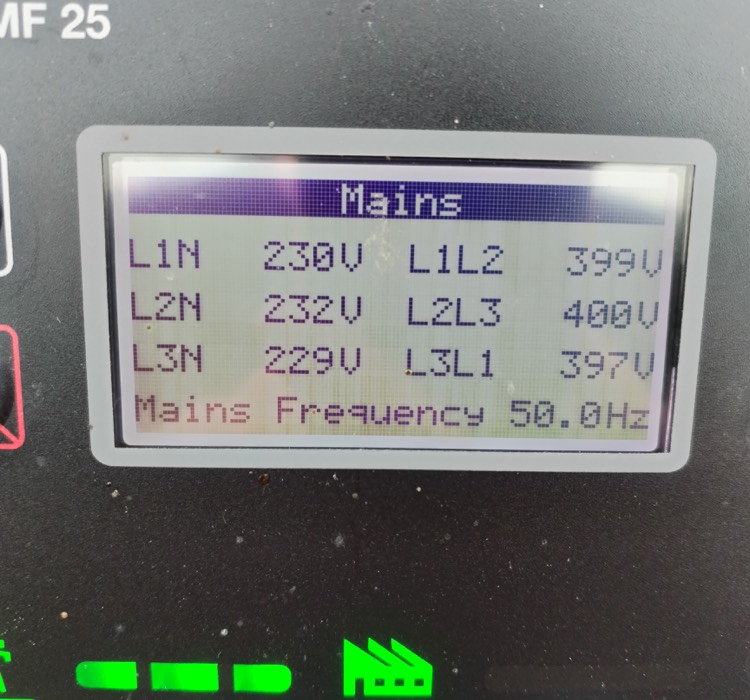
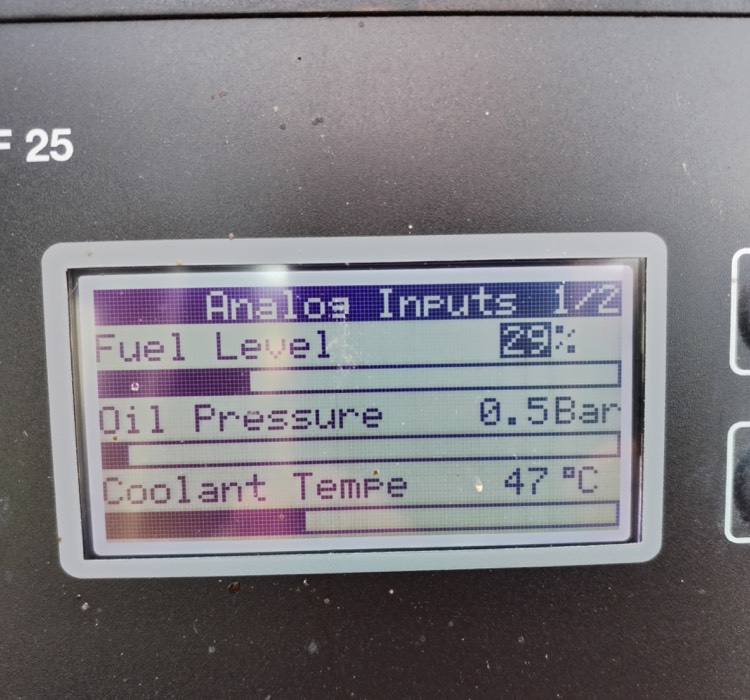
- Recording key readings during the run: oil pressure, coolant temperature, voltage and frequency on each phase, load in kW, and battery voltage during cranking.
- Checking for abnormal noise, vibration, smoke or leaks while the engine runs.
- Testing the batteries. Most service teams add a monthly conductance test or, for flooded lead-acid batteries, a specific gravity check.
Running a generator with no load or very light load for months does more harm than good on a diesel engine. Unburned fuel and carbon build up in the exhaust system, a problem known as wet stacking. If your site load cannot reach 30%, plan the annual load bank test described below.
Annual generator service checklist
Standby generators rarely reach 250 run hours in a year, so in practice the calendar triggers most services. Oil, coolant and fuel age even when the engine does not run.
Every 12 months or 250 run hours, whichever comes first:
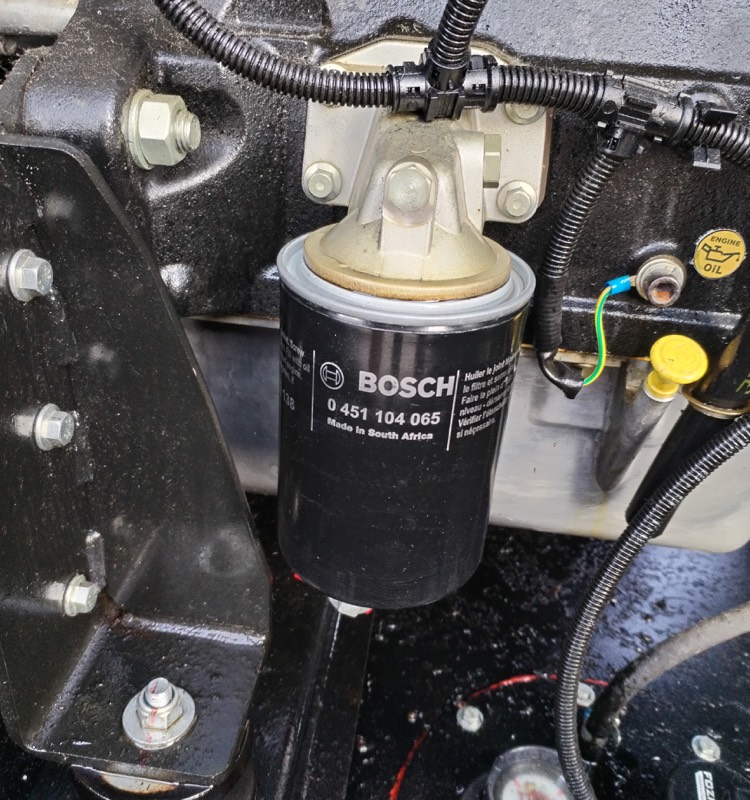
- Change engine oil and oil filter.
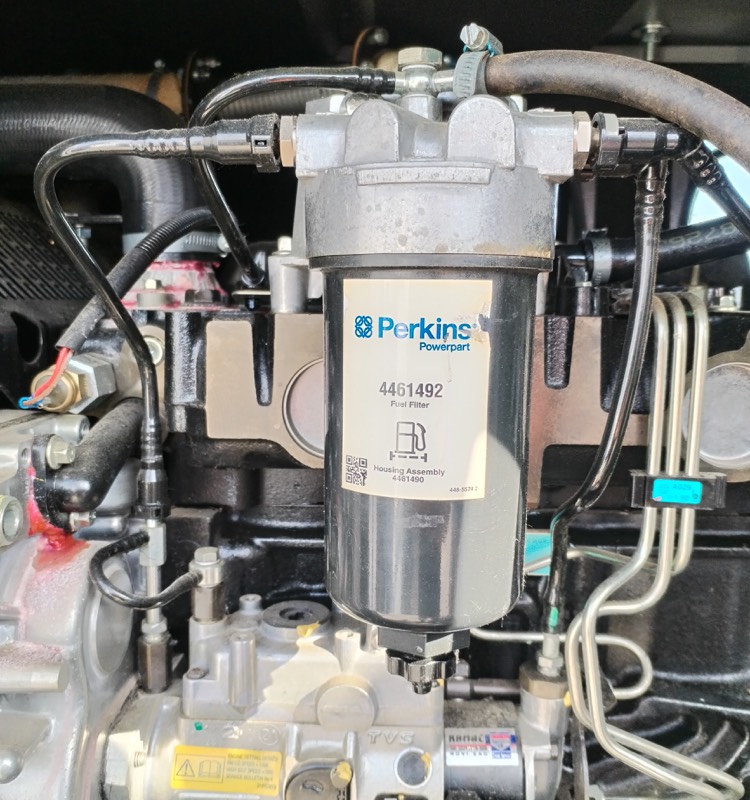
- Replace fuel filters and drain water from the fuel water separator.
- Inspect the air filter and replace it if the restriction indicator or the manual requires it.
- Take a coolant sample and test freeze protection and additive levels.
- Take a fuel sample and test fuel quality. NFPA 110 requires a fuel quality test at least once a year using ASTM methods.
- Load test the starting batteries and clean and tighten the terminals.
- Inspect belts, hoses, clamps and the radiator core.
- Check the exhaust system for leaks and secure mounting.
- Test the safety shutdowns: low oil pressure, high coolant temperature, overspeed and overcrank.
- Inspect the alternator, wiring and terminations. Thermal imaging under load helps find loose connections.
- Inspect and service the automatic transfer switch according to its manufacturer.
- Review the controller settings, the event log and the firmware version.
When is a load bank test required?
A load bank is a portable resistive load that lets the generator run at a known percentage of its rating, independent of the building.
NFPA 110 requires an annual load bank test for diesel generators that cannot meet the monthly 30% load or exhaust temperature requirement. The minimum is 50% of nameplate kW for 30 continuous minutes, followed by 75% for 60 continuous minutes, for a total of at least 1.5 hours.
Even where it is not required, an annual load bank test is a good idea for any generator that normally runs lightly loaded. It burns off carbon deposits, proves the engine can carry real load, and gives a clean set of readings to compare year over year.
Multi-year maintenance tasks
Some components wear out on a fixed schedule regardless of use:
| Component or task | Typical interval | Notes |
|---|---|---|
| Starting batteries | 3 to 5 years | Replace earlier if conductance or load tests show decline |
| Coolant | 2 to 6 years | Depends on coolant type; follow the coolant analysis |
| Hoses and belts | 3 to 5 years | Rubber ages with heat cycles even without running hours |
| Extended duration test | Every 36 months | NFPA 110 requires it for Level 1 systems, up to 4 hours |
| Fuel tank cleaning or polishing | As fuel tests require | Water and microbial growth are the usual triggers |
How to run a maintenance schedule across a generator fleet
One generator can live on a paper calendar. Fifty generators across a region cannot. Fleets that keep their units ready tend to do five things:
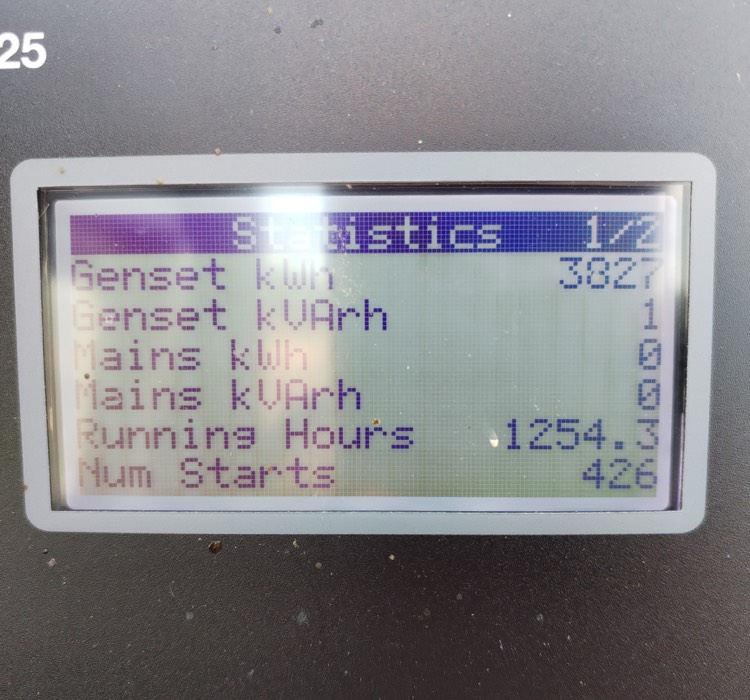
- Keep one asset register. Every generator has a record with location, engine and alternator model, rated kW, controller type, fuel tank size, install date, last service and current run hours.
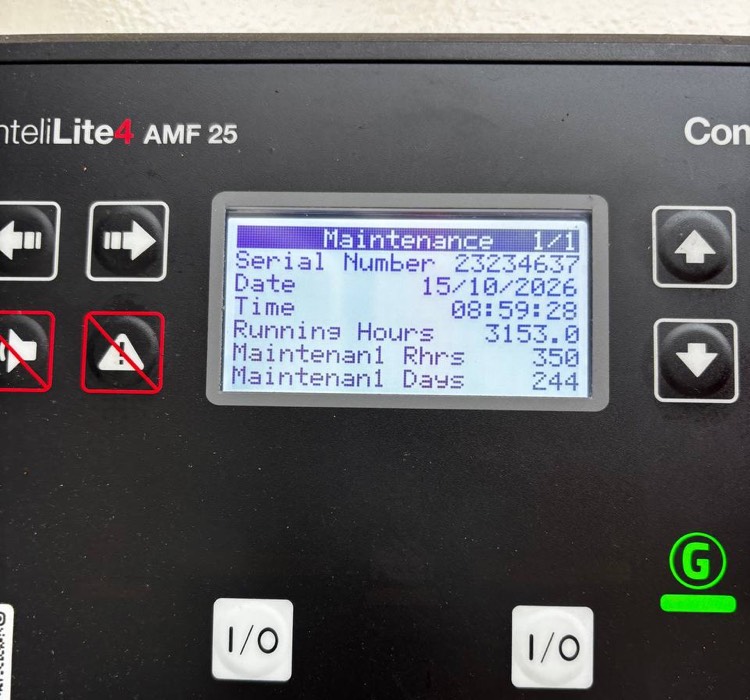
- Trigger work by hours and calendar together. Each task is due when either limit is reached, so a unit that ran hard during a long outage gets serviced early.
- Let remote monitoring do the routine checking. A controller connected to a monitoring platform reports alarms, battery voltage, fuel level, run hours and test results continuously. Technicians then visit with a purpose instead of driving to check a gauge.
- Use digital checklists with readings and photos. Technicians enter values on a phone at the site, so the office sees the result before the van leaves, and the record is ready for audits. NFPA 110 requires written records of inspections, tests and repairs.
- Close the loop. A failed check creates a work order automatically, and the job is not closed until the fix is confirmed.
Frequently asked questions
How often should a standby generator be serviced?
A standby generator should get a full service at least once a year, or every 250 run hours if it reaches that sooner. On top of that it needs a weekly inspection and a monthly test run under load. The exact intervals come from the manufacturer's manual.
How long should a generator run during a monthly test?
NFPA 110 requires at least 30 minutes per month for emergency systems in Level 1 and Level 2 service. The run should be at no less than 30% of the nameplate kW rating, or at a load that keeps the exhaust temperature at the manufacturer's recommended minimum.
What is the most common reason a generator fails to start?
Battery problems are the most frequently cited cause of failed generator starts. Other common causes are a control switch left in OFF or MANUAL, a failed battery charger, low or contaminated fuel, and low coolant that triggers a shutdown.
How long can a diesel generator sit without running?
A standby diesel generator should not sit without running for more than about a month. Monthly exercise keeps the engine lubricated, the battery checked and the fuel moving. Stored diesel also ages, which is why NFPA 110 requires a fuel quality test at least once a year.
What does annual generator maintenance cost?
The cost depends on the generator size, the number of units on one contract, travel distance and whether a load bank test is included. For fleets, the largest savings usually come from fewer wasted site visits and from catching battery and fuel problems before they cause an emergency callout.
Does remote monitoring replace site inspections?
Remote monitoring replaces much of the routine checking: alarms, battery voltage, fuel level, run hours and test results arrive automatically. It does not replace hands-on work such as leak checks, fluid changes, belt inspections and load bank tests, but it lets technicians visit less often and with a clear task.
Sources
- NFPA 110, Standard for Emergency and Standby Power Systems, chapter 8 (Routine Maintenance and Operational Testing). Section numbers vary between editions.
- Engine, alternator and transfer switch manufacturers' operation and maintenance manuals for the specific unit.

See every generator's status and service plan in one place
GenSetCare reads alarms, fuel and run hours from the controller, schedules service by run hours and calendar, and gives technicians a field app with live checklists.