
ATS Testing and Maintenance: How to Test an Automatic Transfer Switch and What to Check Every Year
Test an automatic transfer switch every month by simulating a utility failure so the generator starts, takes the load and transfers back, as NFPA 110 requires for emergency systems. Once a year, inspect it de-energized: contacts, mechanism, wiring and connections, plus timers and sensing settings, and check connections under load with thermal imaging.
In this article
A generator that starts perfectly is useless if the load never reaches it. Between the two sits the automatic transfer switch, the ATS. It watches the utility, tells the generator to start and moves the load across. Then, when the grid is back, it moves the load home again.
Because it spends years in one position, the ATS is one of the least exercised parts of a standby system. That is exactly why it needs its own place in the maintenance schedule.
What does an automatic transfer switch do?
An automatic transfer switch connects the load to one of two sources: the normal source (the utility) or the emergency source (the generator). It does four things:
- Senses the utility for loss of voltage, low or high voltage and wrong frequency.
- Signals the generator to start when the utility fails, after a short delay to ride through brief dips.
- Transfers the load to the generator once its voltage and frequency are stable.
- Retransfers the load to the utility after it has been stable for a set time, then lets the generator cool down and stop.
On many small sites, such as telecom sites, the same job is done by a pair of contactors inside the generator panel, driven by an auto mains failure (AMF) controller. The testing principles are the same.
Types of automatic transfer switches
| Type | How it transfers | Typical use |
|---|---|---|
| Open transition | Breaks from one source before making to the other; a short interruption | Most standby sites |
| Closed transition | Briefly connects both sources, then opens one; no interruption | Sites where even a short break is not acceptable; needs utility approval |
| Delayed transition | Opens, waits a set time with the load disconnected, then closes | Large motor loads that must slow down before reconnecting |
| Bypass-isolation | Adds a bypass path so the ATS can be tested or removed without dropping the load | Hospitals, data centres, critical facilities |
How to test an automatic transfer switch
The monthly generator test is also the monthly ATS test, as long as it is started the right way. NFPA 110 requires transfer switches in emergency systems to be operated monthly.
- Start the test by simulating a utility failure, using the test switch on the ATS or controller, or by opening the normal source breaker where the procedure allows it. Starting the generator by hand skips the ATS completely.
- Time the transfer. Note how long it takes from the simulated failure to the load being on the generator. Type 10 systems must carry the load within 10 seconds.
- Run under load for at least 30 minutes, as required for the generator, and record voltage, frequency and load.
- End the test and watch the retransfer. The load should move back to the utility after the retransfer delay, and the generator should run its cool-down and stop.
- Confirm the final state. The ATS is back in automatic mode, the generator controller is in AUTO, and no alarms are left active.
- Record the results: times, readings and anything unusual. NFPA 110 requires written records of tests.
Annual ATS maintenance checklist
Once a year, plan a maintenance visit with the ATS de-energized, following the manufacturer's procedure and local safety rules. A bypass-isolation switch lets this happen without dropping the load; otherwise it needs a planned shutdown window.
With the ATS energized and carrying load, before the shutdown:
- Run a thermal imaging scan of power connections, cables and contacts to find hot spots.
- Note any unusual noise, smell or discolouration.
With the ATS de-energized and isolated:
- Inspect the main contacts for pitting, burning and wear, and the arc chutes for damage.
- Check the mechanism and operate it manually if the manufacturer allows, looking for binding or slow movement.
- Clean dust and debris; check for moisture, insects and rodents in the enclosure.
- Check and tighten power and control connections to the manufacturer's torque values.
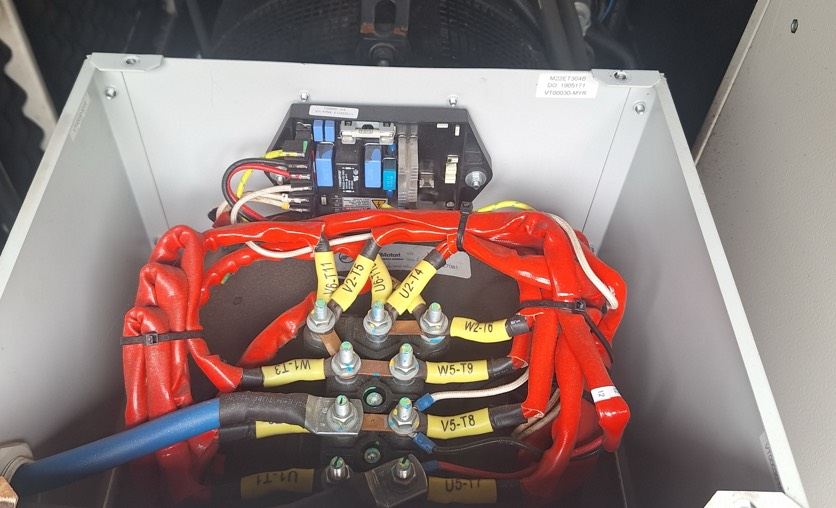
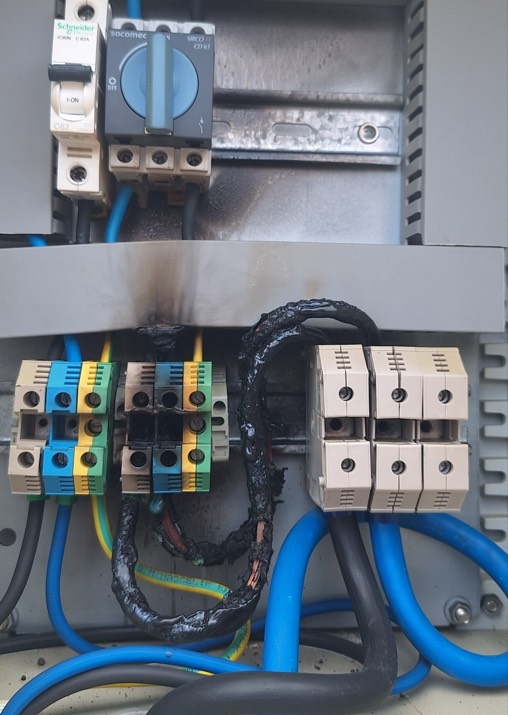
- Inspect cables, insulation and terminals for heat damage.
- Check the control power supply and any controller battery.
Back in service:
- Verify voltage and frequency sensing settings and all timers against the site design.
- Check the exerciser clock if the ATS schedules generator tests.
- Run a full transfer test under load and record the results.
Common automatic transfer switch failures
| Symptom | Likely causes |
|---|---|
| Generator starts but the load does not transfer | Failed transfer mechanism or motor operator, control power fault, generator not reaching the voltage or frequency setpoint |
| Load does not return to the utility | Utility sensing fault, blown sensing fuse, retransfer delay set too long, mechanism stuck |
| Transfer takes longer than 10 seconds | Start delay set too long, slow engine start, weak starting battery |
| Generator starts on brief dips | Start delay too short, utility sensing set too tight |
| Hot spots or discolouration at terminals | Loose connections, worn contacts, overloaded conductors |
| Switch hums or chatters | Low control voltage, mechanical wear, contamination |
Many of these leave a trace in the controller's event log: the time between mains failure and generator breaker closed, retransfer times, and repeated starts on short dips. With remote monitoring, a transfer that is getting slower shows up long before it fails the 10 second limit.
Frequently asked questions
How often should an automatic transfer switch be tested?
For emergency power systems covered by NFPA 110, transfer switches must be operated monthly, normally as part of the monthly generator test under load. A full maintenance inspection with the switch de-energized is usually done once a year.
How do you test an automatic transfer switch?
Simulate a utility failure with the ATS test switch or by opening the normal source breaker, check that the generator starts and the load transfers within the required time, run under load, then confirm that the load transfers back to the utility and the generator cools down and stops.
What is the 10 second rule for transfer switches?
NFPA 110 Type 10 systems must restore power to the load within 10 seconds of a utility failure. The time includes the start delay, engine start and the transfer itself, so all three need to be fast and reliable.
What is the difference between open and closed transition ATS?
An open transition ATS disconnects one source before connecting the other, which causes a short interruption. A closed transition ATS briefly connects both sources so the load sees no interruption, which usually needs approval from the utility.
What is included in annual ATS maintenance?
Annual ATS maintenance usually includes thermal imaging under load, then a de-energized inspection of contacts, mechanism, wiring and connections, cleaning and torque checks, followed by verification of timers and sensing settings and a full transfer test.
Sources
- NFPA 110, Standard for Emergency and Standby Power Systems, chapters 6 and 8, including transfer switch requirements, Type 10 classification and monthly operation.
- NFPA 70B, Standard for Electrical Equipment Maintenance, for inspection and thermal imaging practice.
- Transfer switch manufacturers' operation and maintenance manuals.
- Related reading: generator maintenance schedule and checklist and generator controllers explained.

See every generator's status and service plan in one place
GenSetCare reads alarms, fuel and run hours from the controller, schedules service by run hours and calendar, and gives technicians a field app with live checklists.