
Wet Stacking in Diesel Generators: Causes, Warning Signs in Controller Data and Prevention
Wet stacking is the build-up of unburned fuel, soot and oil in a diesel engine's exhaust when it runs too lightly loaded, usually below 30% of its rated kW. Prevent it by testing at 30% load or more, sizing generators to the real load, and running an annual load bank test on units that cannot reach that load on site.
In this article
A diesel engine is built to work hard. Run it at a fraction of its rating month after month and it slowly chokes on its own fuel. Black, oily residue appears at exhaust joints, smoke gets darker, and one day the generator cannot carry the load it was bought for.
That condition is called wet stacking. It is one of the most common and most preventable problems in standby generator fleets, especially at small sites where the generator is much larger than the load it actually feeds.
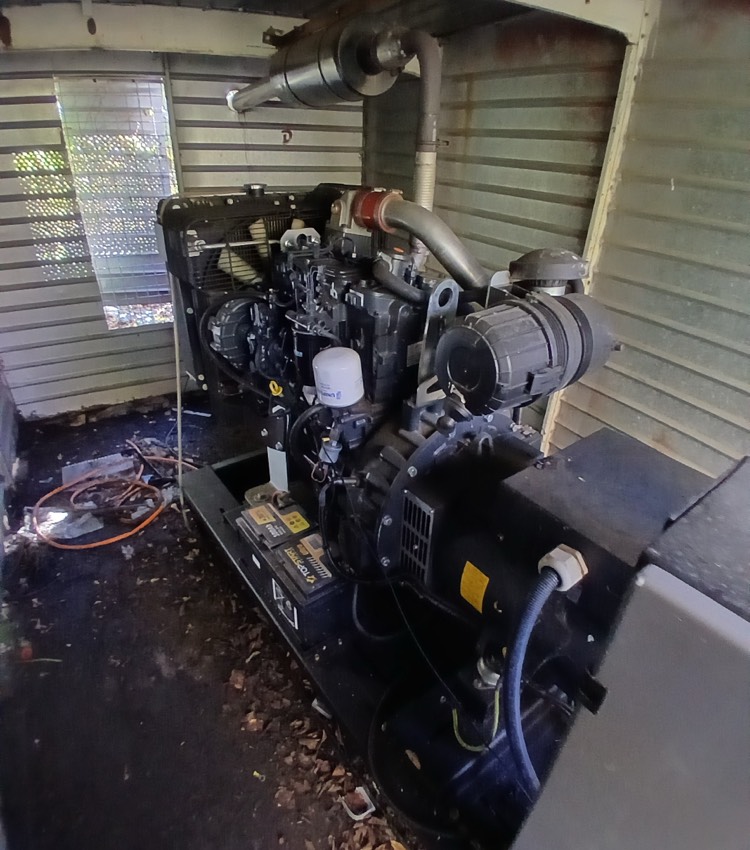
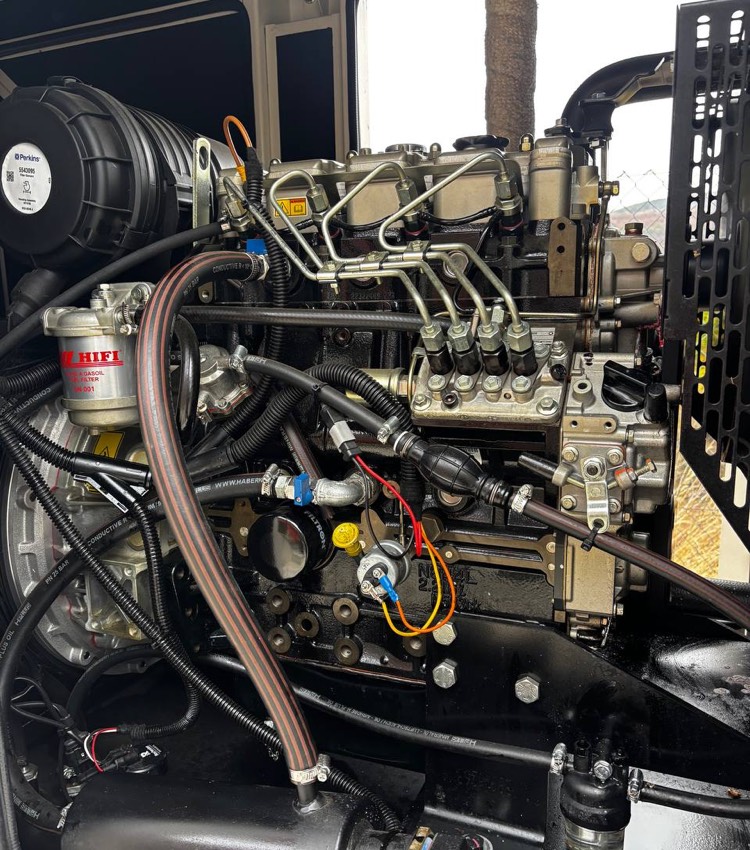
What is wet stacking?
Wet stacking is the accumulation of unburned fuel, soot and lubricating oil in the exhaust system of a diesel engine. It happens when the engine runs at light load for long periods, so the combustion chambers never get hot enough to burn all the fuel that is injected.
The name comes from the exhaust stack, which becomes wet with a black, tar-like liquid. Mechanics also call the dripping residue "slobber".
What causes wet stacking?
Diesel engines rely on high cylinder temperature and pressure to burn fuel completely. At light load, cylinder temperature stays low, and several things go wrong at once:
- Fuel does not burn completely. Part of it leaves the cylinder unburned and condenses in the exhaust manifold, turbocharger and pipe.
- Piston rings do not seal fully. Rings need combustion pressure to press against the cylinder wall. Without it, oil passes up into the combustion chamber and fuel passes down into the crankcase.
- Cylinder walls glaze. Over time, a hard, smooth layer forms on the liners. Glazed liners hold less oil film and wear faster, and the damage is not reversed by simply running the engine harder.
The usual root causes in a fleet are:
- Oversized generators. A unit sized for future growth, for a battery recharge peak or for a load that never arrived spends its life far below its rating.
- No-load or light-load testing. A monthly run with no load connected exercises the engine but feeds the problem.
- Long idle periods during commissioning, troubleshooting or cool-down without a defined end.
What are the signs of wet stacking?
Wet stacking shows itself in stages. The earlier you catch it, the cheaper it is to fix.
| Stage | What you see | What it means |
|---|---|---|
| Early | Black, oily drips at exhaust joints and the rain cap; dark smoke at start-up | Unburned fuel is condensing in the exhaust |
| Developing | Persistent dark or bluish smoke under load; rising oil consumption; fuel smell in the oil | Rings are not sealing; fuel is diluting the oil |
| Advanced | Loss of power, rough running, failure to carry rated load; heavy carbon on injectors and turbo | Glazed liners and carbon deposits need mechanical repair |
Oil analysis can confirm fuel dilution before it is visible. If the annual oil sample shows fuel in the oil, look at how lightly the unit has been running.
How to spot wet stacking risk in controller data
You do not have to wait for black drips. Modern generator controllers record the data that shows the risk months in advance:
- Load during each run, in kW or as a percentage of rating. A unit that never reaches 30% is at risk, no matter how often it runs.
- Run duration and number of starts. Many short runs with no load are worse than one longer run under load.
- Exhaust temperature, if a sensor is fitted. Manufacturers often give a minimum exhaust temperature for healthy operation.
- Coolant temperature during the run. An engine that never reaches normal operating temperature during tests is running too lightly.
- Running hours against fuel used. Very low fuel consumption per running hour is another sign of light load.
When this data is collected from every site in one platform, the risky units stand out in a simple list: the generators whose test loads stayed below 30% for the last twelve months.
How to prevent wet stacking
- Test under real load. Start monthly tests through the transfer switch so the site load is carried. NFPA 110 requires at least 30 minutes per month at no less than 30% of the nameplate kW rating, or at the manufacturer's minimum exhaust temperature.
- Run an annual load bank test where site load cannot reach 30%. The NFPA 110 minimum is 50% of nameplate kW for 30 minutes followed by 75% for 60 minutes. See our generator maintenance schedule for the full test profile.
- Size new generators to the real load. When replacing a unit, look at the logged load history, not only the design figure.
- Avoid long no-load running. Keep cool-down periods to what the manufacturer specifies and do not leave units idling during site work.
- Watch the data. Review load per run across the fleet every quarter and plan load bank tests from that list.
Can wet stacking be fixed?
In the early and developing stages, yes. Running the generator at high load for a few hours raises cylinder and exhaust temperatures enough to burn off most of the deposits. This is normally done with a load bank, stepping the load up gradually and following the manufacturer's procedure, because a sudden full load on a heavily wet-stacked engine can cause excessive smoke or overheating of the exhaust.
After the clean-up run, change the oil if analysis showed fuel dilution, and check the exhaust system for residue that did not burn off.
In the advanced stage, when the cylinder liners are glazed, running at high load no longer restores the engine. The fix is mechanical: honing or replacing liners and rings, and cleaning or replacing injectors and turbocharger parts. That is a far bigger bill than an annual load bank test.
Frequently asked questions
What load prevents wet stacking in a diesel generator?
Most manufacturers and NFPA 110 use 30% of the rated kW as the minimum load for regular operation and testing of diesel generators. Some engines need more, so check the manufacturer's minimum load or minimum exhaust temperature for the specific unit.
How do you stop wet stacking?
Test the generator under real load of at least 30% of its rating, run an annual load bank test if the site load is lower, avoid long no-load running, and size replacement generators to the measured load.
Does wet stacking damage the engine?
Yes, if it goes on long enough. Early wet stacking is mostly deposits that can be burned off. Over time it causes fuel dilution of the oil, carbon build-up on injectors and turbocharger, and glazing of the cylinder liners, which needs mechanical repair.
Is black smoke from a generator always wet stacking?
No. Black smoke can also come from a blocked air filter, faulty injectors, overload or wrong fuel settings. Wet stacking is the likely cause when black smoke and oily exhaust residue appear on a generator that usually runs at light load.
Can a load bank test fix wet stacking?
A load bank test at increasing load usually clears early and developing wet stacking by burning off the deposits. It cannot reverse cylinder liner glazing, which needs mechanical repair.
Sources
- NFPA 110, Standard for Emergency and Standby Power Systems, chapter 8 (Routine Maintenance and Operational Testing). Section numbers vary between editions.
- Engine manufacturers' operation and maintenance manuals, including minimum load and exhaust temperature guidance for each model.

See every generator's status and service plan in one place
GenSetCare reads alarms, fuel and run hours from the controller, schedules service by run hours and calendar, and gives technicians a field app with live checklists.